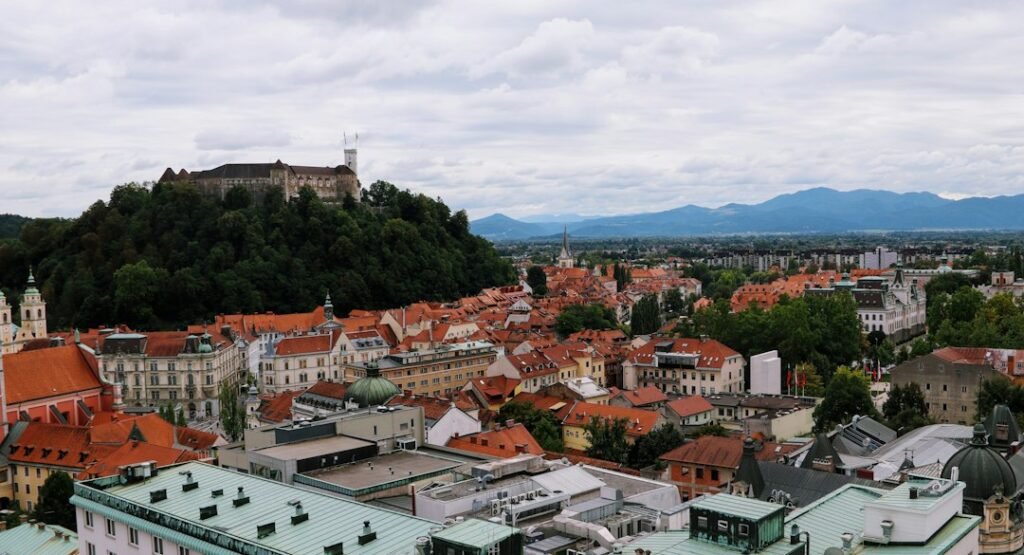
Slovenia is one of the clearest examples of why “cheap universities in Europe” needs more explanation than a tuition table. For some students, full-time study at a publicly funded Slovenian institution can carry no tuition. For others, annual fees can run into several thousand euros. The difference depends largely on nationality, study cycle, institution and whether the programme is publicly funded.
That makes Slovenia potentially very affordable, but only if you understand which fee category actually applies to you.
This guide explains Slovenia’s current tuition framework, the important EU and Western Balkan exemptions, typical fee ranges for students who do pay, living costs, admissions, English-taught options, scholarships and how to decide whether Slovenia is financially realistic for your full degree.
Current tuition ranges in Slovenia
The official Study in Slovenia portal currently gives typical annual tuition ranges of:
- €2,000–€11,000 for bachelor’s programmes;
- €2,000–€15,000 for master’s programmes;
- €2,000–€6,000 for doctoral programmes.
Those figures apply to students who are required to pay tuition. The critical question is whether you fall into an exempt category.
Use the official Study in Slovenia tuition and funding guidance as the starting point.
Who can study without tuition?
Under the current rules described by Study in Slovenia, full-time students in publicly funded first- and second-cycle programmes can be exempt from tuition if they fall into certain categories.
These include:
- citizens of Slovenia;
- citizens of EU member states;
- citizens of Bosnia and Herzegovina;
- citizens of Montenegro;
- citizens of Kosovo;
- citizens of North Macedonia;
- citizens of Serbia;
- some people with recognised international-protection status;
- some foreign nationals with permanent residence and Slovenian tax residence.
The exact rule depends on study level and institutional funding, so do not assume nationality alone guarantees exemption.
Why the Western Balkan exemption matters
For a Serbian, Bosnian, Montenegrin, Kosovan or North Macedonian student, Slovenia can become substantially more affordable than a generic international-student tuition table suggests.
A full-time student in an eligible publicly funded first- or second-cycle programme may pay no tuition even though a non-EU student from another country could be charged several thousand euros for the same degree.
That is why Slovenia should be researched by applicant profile, not by one national average.
Who normally pays tuition?
The official portal currently identifies several common fee-paying groups:
- non-EU/EEA students who do not hold the relevant permanent-residence status;
- part-time students at public institutions;
- doctoral students;
- students at private institutions without public funding;
- some students enrolling at a level they have already completed.
Bachelor’s tuition
For students who pay, bachelor’s programmes typically range from about €2,000 to €11,000 per year.
The lower end can be attractive compared with many Western European or English-speaking destinations, but do not assume every English-taught bachelor’s programme starts at €2,000.
Master’s tuition
Typical master’s tuition for fee-paying students ranges from about €2,000 to €15,000 per year.
The range is wide enough that subject and institution matter greatly. A social-science master’s and a specialised professional programme can sit far apart.
Doctoral tuition
Doctoral students normally pay tuition, and the current national range is about €2,000–€6,000 per year.
For PhD applicants, funding should be investigated separately. A doctoral programme with a tuition fee can still be affordable if a scholarship, research project or employment arrangement covers the cost.
Main universities to research
Slovenia’s major higher-education institutions include:
- University of Ljubljana;
- University of Maribor;
- University of Primorska;
- University of Nova Gorica;
- specialised public and private higher-education institutions.
The best choice depends on programme, language and fee status rather than institutional prestige alone.
University of Ljubljana
The University of Ljubljana is the country’s largest and most comprehensive institution. It offers broad programme coverage and sits in the capital, where housing and daily costs can be higher than in smaller cities.
A tuition exemption can make Ljubljana academically attractive, but living costs still need to be budgeted realistically.
University of Maribor
Maribor can be attractive to cost-conscious students because it is a major university city with generally lower living pressure than Ljubljana.
For students who qualify for tuition exemption, the total cost can be especially competitive.
University of Primorska
Located on the coast, the University of Primorska can appeal to students seeking a smaller-city environment. Housing availability and coastal rental patterns should be checked early.
Living costs in Slovenia
The European Education Area currently estimates student living costs at roughly €400–€800 per month depending on city and lifestyle.
That means a tuition-free student may still need around €4,800–€9,600 per year for ordinary living expenses before travel and one-off costs.
Ljubljana versus smaller cities
Ljubljana usually has the strongest housing demand. Maribor and some smaller cities may offer lower rents, but course availability can be narrower.
Do not choose a city before confirming that the programme you want is actually offered there.
Housing should be researched before accepting
Student dormitories can reduce costs substantially, but they are not guaranteed to every international student.
Ask:
- Is university housing available to first-year international students?
- What is the application deadline?
- Are rooms allocated by priority or lottery?
- What private-rental backup is realistic?
Use StepOut’s Accommodation Guide when evaluating rental offers.
English-taught programmes
Slovenian universities offer a growing number of programmes and courses in English, particularly at master’s and doctoral level.
However, not every full degree is available in English. Some programmes may include individual English-taught modules rather than a complete English-language degree.
Confirm the teaching language on the university’s official programme page.
Does English-taught study affect tuition?
It can. Some fee structures differ by programme, institution or mode of delivery. Students should therefore check the programme price rather than relying only on nationality-based exemption guidance.
Application process
Applications to Slovenian higher education generally follow national and institutional procedures that vary by cycle and applicant background.
International applicants commonly need:
- previous academic certificates;
- transcripts;
- identity documents;
- recognition of foreign education where required;
- language evidence;
- programme-specific documents.
Recognition of foreign qualifications
Your previous education may need to be recognised as part of the admission process. Start early because document legalisation, translation and recognition can take time.
Application timing
Do not wait until the final admission period if you also need a visa or residence permit. International applicants often need additional time for document recognition and immigration preparation.
Student visa and residence
EU/EEA citizens have a different residence framework from third-country nationals.
Non-EU students generally need to follow Slovenian visa and residence rules for long-term study. Proof of admission, finances, insurance and accommodation can be relevant.
Use StepOut’s Proof of Funds Guide alongside the official Slovenian immigration guidance.
Scholarships
Study in Slovenia currently lists several scholarship routes, including Ad futura mobility programmes and a 2026 public call for foreign citizens from Western Balkan countries pursuing selected postgraduate master’s fields.
Scholarship availability changes by academic year, so check the live call rather than relying on an older summary.
Why scholarship planning still matters for tuition-exempt students
A student who pays no tuition still needs money for rent, food, transport, insurance and residence costs.
A living-cost scholarship can therefore matter as much as a tuition waiver.
Can Slovenia be cheaper than Germany?
For an exempt student, yes in some cases, especially if living costs are lower than in a major German city. For a fee-paying non-EU student, Germany may have lower tuition at many state universities.
The comparison must be made at programme and city level.
Can Slovenia be cheaper than Romania?
For students who qualify for tuition exemption, Slovenia can be cheaper on tuition. Romania can have lower housing and daily costs in some cities and affordable non-EU tuition.
Neither country is universally cheaper.
Can Slovenia be cheaper than Italy?
Italy’s public fees can be income-linked and reduced through exemptions, while Slovenia’s rules can waive tuition entirely for certain nationalities and statuses.
The better-value option depends on the student profile.
Part-time work
Student work opportunities exist in Slovenia, but employment should not be used as the core funding plan for a degree you otherwise cannot afford.
Work rights depend on immigration status and current regulation.
Total-cost example
Suppose a non-EU student pays €4,000 tuition and spends €600 per month for twelve months. The annual cost is already around €11,200 before travel, insurance, deposits and application expenses.
Now consider an exempt Western Balkan student at the same institution. Removing tuition reduces the cost substantially, but the living-cost budget still remains.
This is why fee status is the first question to answer.
How to check whether you qualify for tuition exemption
- Confirm nationality and residence status.
- Check whether the programme is full time.
- Check whether the institution/programme is publicly funded.
- Check the study cycle.
- Confirm whether you already hold an equivalent-level qualification.
- Ask the university to confirm your fee category in writing.
Do not assume “Western Balkan” automatically means free
The exemption applies under defined conditions. It does not mean every private programme or doctoral course is free.
Programme quality still matters
Low or zero tuition should not replace normal due diligence. Check:
- accreditation;
- curriculum;
- language;
- faculty;
- internships;
- career relevance;
- professional recognition.
Application fees and deposits
Universities can have application, enrolment or administrative charges even when tuition is waived.
Before paying anything, confirm whether the payment is refundable and whether it is credited toward tuition.
Use StepOut’s Tuition Deposit and Refund Guide.
Who should seriously consider Slovenia?
Slovenia deserves strong consideration from:
- EU students;
- eligible Western Balkan students;
- students seeking smaller European university cities;
- master’s applicants looking for specialised European programmes;
- students comfortable researching tuition eligibility carefully.
Who should be cautious?
Be cautious if:
- you assume every programme is tuition-free;
- you have not confirmed the teaching language;
- you rely on Ljubljana housing without a backup plan;
- you assume a doctoral programme is covered by undergraduate exemptions;
- you have not checked recognition of your previous qualification.
Slovenia application checklist
- Choose the programme and study cycle.
- Check whether you qualify for tuition exemption.
- Verify the exact fee with the university.
- Confirm language of instruction.
- Prepare qualification-recognition documents.
- Estimate city-level housing.
- Check scholarship eligibility.
- Calculate total annual cost.
- Prepare residence and financial evidence.
- Read refund and enrolment rules before paying.
Tuition-free does not mean application-free
Even when tuition is waived, students can still face application, enrolment, residence, insurance, document-recognition and housing costs. Build a first-year cash-flow plan rather than assuming a tuition exemption removes all upfront expense.
Check whether your exemption survives a change in study mode
The national exemption framework is tied to full-time study in qualifying programmes. If you later switch to part-time status or another fee-paying mode, the financial position can change. Ask the university how a programme change or repeat year would affect tuition.
Living-cost differences between Ljubljana and Maribor matter
Ljubljana offers the widest programme choice and major academic networks, but stronger housing demand can raise the total cost. Maribor can be more affordable for some students. Compare actual room listings, dormitory availability and commuting rather than relying on one national average.
Confirm whether the entire degree is in English
Some Slovenian programmes advertise substantial English delivery without every compulsory component being available in English. Before applying, check the full curriculum, examination language and whether internships or placements require Slovenian.
Prepare for qualification-recognition costs
Foreign certificates may need certified translations, legalisation or recognition. These expenses are easy to overlook because they occur before enrolment, but they belong in the application budget.
Scholarship and admission deadlines may not match
A scholarship can close before the university application or require that you already have admission. Keep separate deadlines for the degree, funding and residence process so one late step does not make the whole plan unaffordable.
Use a full-degree budget, not a first-year budget
For a three-year bachelor’s, calculate years two and three as well. If tuition is waived but housing rises, the later cost can still increase. For a fee-paying master’s, check whether the same tuition applies in every year.
What to ask the university before accepting
- Which tuition category applies to my nationality and status?
- Is the programme publicly funded?
- Is the full degree taught in English?
- Is dormitory housing available?
- What are the enrolment and administrative fees?
- What happens after a visa refusal?
- Can the offer be deferred?
Check whether your exemption applies for the whole degree
Do not assume a tuition exemption granted at entry automatically covers every later situation. Repeating a year, changing programme, moving to part-time status or beginning another degree at the same level can affect fees. Ask the university what conditions preserve your fee status.
Plan around the academic calendar
Slovenian universities may have different enrolment, housing and residence timelines. Build one calendar that includes admission, document recognition, scholarship, dormitory, visa/residence and enrolment deadlines.
Budget transport and insurance separately
National living-cost estimates are useful, but transport passes, insurance and residence-related costs can sit outside your basic rent-and-food estimate. Include them explicitly so your monthly budget does not look artificially low.
Compare Ljubljana prestige with total cost
The capital may offer broader course choice and professional networks, but a comparable programme in Maribor or another city can reduce housing pressure. If academic quality and curriculum are similar, the city can become the deciding financial factor.
Use written confirmation for your fee status
If your nationality or residence status qualifies you for an exemption, ask the institution to confirm the applicable fee category in writing before you commit to travel or housing.
Do not ignore later-year housing risk
A dormitory place in year one does not always guarantee the same arrangement later. Check whether returning students have priority and whether you could afford the private market if university housing is unavailable.
Keep a written record of the exemption decision
If the university confirms that you are tuition-exempt, save that message with your admission documents. It gives you a clear reference if later billing or enrolment records show a different fee category.
Frequently asked questions
Is university free in Slovenia for international students?
It can be tuition-free for eligible full-time students, including EU citizens and citizens of certain Western Balkan countries, in qualifying publicly funded first- and second-cycle programmes.
How much do non-EU students pay?
Typical annual tuition is currently about €2,000–€11,000 for bachelor’s and €2,000–€15,000 for master’s programmes, depending on the course.
Are PhDs free?
Doctoral students generally pay tuition, currently often around €2,000–€6,000 per year, although funding can change the effective cost.
How expensive is Slovenia to live in?
The European Education Area currently estimates around €400–€800 per month depending on city and lifestyle.
Can Serbian students study tuition-free in Slovenia?
Eligible Serbian citizens can be exempt from tuition in qualifying full-time publicly funded first- and second-cycle programmes under the current rules.
Are there English-taught programmes?
Yes, especially at postgraduate level, but students should confirm that the full degree—not just individual courses—is taught in English.
Place Slovenia inside the wider affordability cluster
Compare Slovenia with Low-Cost European Countries, Low-Tuition Public Universities and Affordable Student Cities. Environmental applicants can also use the Environmental Science and Sustainability guide, while postgraduate applicants should compare Affordable Master’s Degrees in Europe.
Before relying on a tuition exemption or fee range, cross-check the current European Education Area profile for studying in Slovenia for updated nationality, fee, living-cost and visa guidance.
Before relying on a tuition exemption or fee estimate, cross-check the current European Education Area profile for studying in Slovenia for current tuition, living-cost and visa guidance.
Final decision
Slovenia can be exceptionally affordable for the right student because its tuition rules are based on more than a simple “EU versus non-EU” divide. EU citizens and eligible Western Balkan students may study without tuition in qualifying programmes, while other international students can still find moderate fees.
The first step is not comparing universities. It is identifying your fee status. Once that is clear, compare programme quality, living cost and housing through the wider Affordable Universities in Europe architecture.