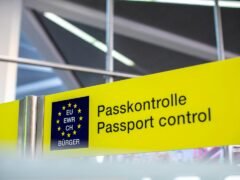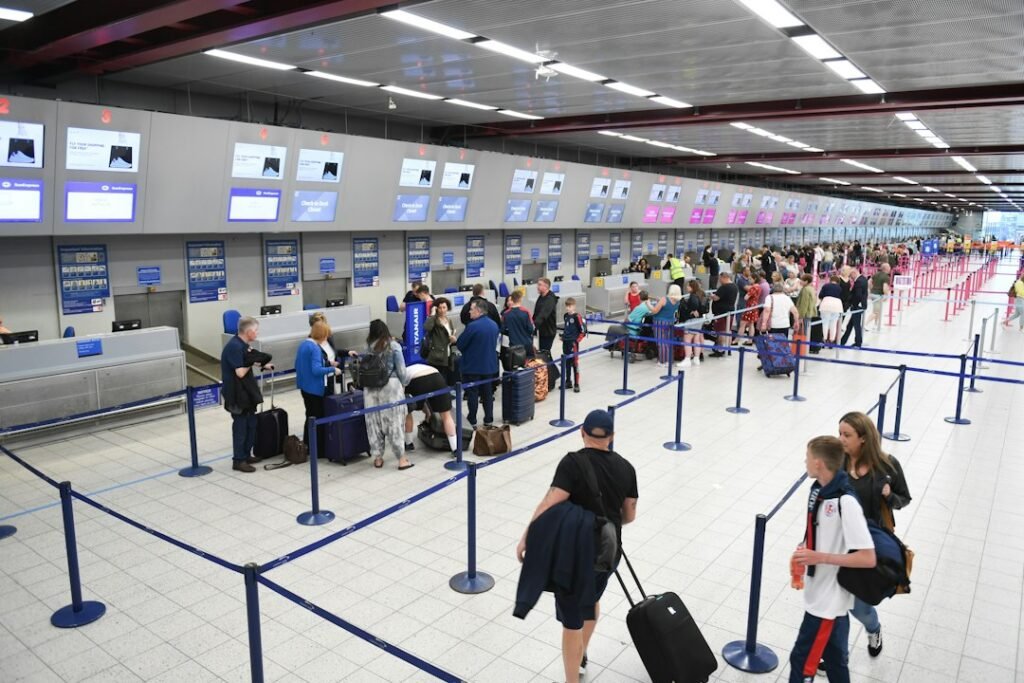
Checked 6 October 2026. Europe’s Entry/Exit System is no longer a future change. It is already operating at the external borders of the Schengen area, and that changes what many non-EU travellers experience when they arrive.
The biggest practical shift is simple: border control is moving away from relying on passport stamps and toward a digital record of entries and exits. For many short-stay visitors, the first encounter with EES also involves a facial image and fingerprints. That can add a little time on the first crossing, especially at a busy airport, port or international rail terminal.
This guide explains what EES actually does, who is normally registered, what happens at the border, how repeat trips work and what it means for the familiar “90 days in any 180 days” Schengen rule. It also separates EES from ETIAS, because those two systems are still being confused online.
What is the Entry/Exit System?
The Entry/Exit System, usually shortened to EES, is the European system used to register certain non-EU nationals when they cross an external border of the countries using the system for a short stay.
The European Commission says EES became fully operational on 10 April 2026. It records entries, exits and refusals of entry and uses travel-document details together with biometric information. The Commission’s current EES material is available through the Migration and Home Affairs smart-borders pages.
This matters because a traveller can no longer assume that an old-style ink stamp is the main record proving when they entered or left. The system is designed to create a digital history of the crossing instead.
Who is affected by EES?
EES broadly concerns non-EU nationals travelling for a short stay to the European countries using the system. It can apply whether the traveller needs a Schengen visa or is allowed to visit visa-free.
That means two travellers standing in the same immigration queue may have very different visa situations but still both be registered in EES. One may hold a short-stay Schengen visa; another may come from a visa-exempt country. EES is about the border crossing and short-stay record, not about turning every visitor into a visa applicant.
There are exemptions, so nobody should decide their status from a social-media checklist. Residence permits, long-stay status, certain family-member rights and other legal categories can change whether EES registration applies. The official EU guidance should be checked for the traveller’s exact position.
Which countries use EES?
The system covers the European countries participating in the EES framework, including the Schengen states at their external borders. Current EU guidance lists 29 countries using EES.
The important phrase is external border. A traveller arriving from outside the EES area at Paris Charles de Gaulle, Madrid, Frankfurt, Rome or another external entry point may encounter the EES process there. A later journey between two Schengen countries is different, although temporary internal border controls can still exist for separate reasons.
StepOut has a separate guide to Schengen internal border controls in 2026 because EES and temporary checks inside Schengen are not the same thing.
What happens the first time you use EES?
Your first EES crossing can involve more steps than a repeat crossing because the border authority may need to create or complete your record.
In practice, the process can include:
- scanning the passport or other accepted travel document;
- recording the date and place of entry or exit;
- taking or confirming a facial image;
- collecting fingerprints where the rules require them;
- checking the traveller against the normal entry conditions; and
- recording a refusal of entry if entry is refused.
The system does not replace the border officer’s legal decision. A digital record is not a guarantee that a traveller will be admitted. The officer can still ask for evidence supporting the purpose and conditions of the trip.
Will everyone have fingerprints taken every time?
No. The reason biometric systems are built is partly so that a previously enrolled traveller can later be matched against an existing record rather than starting from zero on every trip.
That does not mean every repeat crossing will feel identical. Border layout, self-service equipment, local staffing, passport type and the need for additional checks can all affect the experience.
The EU has also said that children under 12 are not fingerprinted under the EES process, although other identity and document checks still apply.
Does EES mean passport stamps have disappeared?
For travellers covered by EES, the system is intended to replace manual passport stamping with a digital record of entry and exit. That is one of the biggest practical changes for frequent travellers who previously counted stamps to reconstruct their Schengen history.
Do not treat “no stamp” as “no record.” In fact, the point of EES is the opposite: the entry or exit is recorded electronically.
If you keep your own travel log, continue doing so. Save boarding passes, booking confirmations and the dates of border crossings. Personal records are useful if you later need to reconstruct a journey or spot a discrepancy, but they do not replace the official EES record.
How EES affects the 90/180-day Schengen rule
The familiar short-stay rule has not been abolished. For travellers to whom it applies, the maximum remains 90 days in any 180-day period.
What EES changes is the record keeping. Instead of a border officer relying heavily on stamps and manual counting, the system can use registered entries and exits to help identify how long a short-stay traveller has been present.
This makes sloppy date assumptions more dangerous, not less. A traveller who previously relied on a half-remembered stamp should now keep a clear personal calendar and verify the legal calculation before travel.
Do not confuse visa validity with permitted stay. A visa sticker can have its own validity window, number of entries and authorised duration. Visa-exempt travellers face a different document situation, but the 90/180 framework can still apply to them.
What if you have a Schengen visa?
EES does not cancel the need for a visa when your nationality and trip require one. You still need the right visa or other legal basis to travel.
At the border, the officer can assess the visa together with the rest of the entry conditions. That can include the real purpose of the visit, accommodation, sufficient funds, onward or return travel and other supporting evidence.
This is why a traveller should not treat visa issuance as the end of trip preparation. For example, France’s official border guidance says travellers may be asked for proof of accommodation covering the stay and evidence of a return ticket or the means to acquire one.
What if you are visa-exempt?
Visa-exempt does not mean exempt from border control. EES can still record the crossing.
You also still need to satisfy the entry conditions that apply to your trip. A border officer may ask about where you are staying, how long you plan to remain, your onward journey and the purpose of the visit.
ETIAS will eventually add a separate pre-travel authorisation requirement for many visa-exempt travellers, but ETIAS is not currently operating. StepOut’s ETIAS 2026 status guide tracks that separately.
EES and ETIAS are not the same system
This is the most common source of confusion.
| Question | EES | ETIAS |
|---|---|---|
| What is it? | Entry/exit registration and border-management system | Pre-travel authorisation for eligible visa-exempt nationals |
| Is it operating now? | Yes | No, not as of 6 October 2026 |
| Where does the traveller encounter it? | At the external border | Application before travel once launched |
| Does it involve biometrics? | EES can record facial image and fingerprints | ETIAS is an online travel-authorisation process |
| Does it replace a visa? | No | No |
If a website is currently offering to submit a live ETIAS application for you, stop and check the official EU site first. The EU currently states that ETIAS is not in operation and no applications are being collected.
What should you allow for at the airport or port?
The sensible planning assumption is that a first EES encounter can take longer than a simple document glance, particularly during a busy arrival wave.
That does not justify inventing a universal “add 45 minutes” rule. There is no honest Europe-wide number because queues depend on the border point, time of day, staffing, passenger mix and how many people require first-time registration.
Build margin where the consequence of delay is serious. This is especially important if you have:
- a self-transfer on separate tickets;
- a connection that requires immigration and baggage recheck;
- an airport change;
- a rail or ferry departure soon after arrival; or
- a ticket where missing the next segment is your own financial risk.
Use StepOut’s Flight Transit Risk & Connection Checker before committing to a tight connection. It cannot tell you whether you legally need a transit visa, but it can expose practical route risks such as self-transfer, airport change, baggage collection and landside movement.
What about self-service kiosks and pre-registration?
Some border points may use self-service systems, e-gates or other automation. Availability is not identical across every country or airport.
A traveller should therefore prepare for the official process at the actual border being used rather than expecting a particular kiosk seen in a video from another airport.
Follow signs, use only official equipment and instructions, and do not hand passport or biometric information to unofficial websites claiming they can “pre-register your EES” for a fee.
Can an EES problem affect a later trip?
Because EES creates an electronic record of crossings, accuracy matters. If an entry is recorded but an exit is not, or if a traveller believes the stored information is wrong, the issue should not simply be ignored.
Keep evidence of travel dates. If you discover a suspected error, use official EU or national border-authority channels to understand the correction procedure. Do not attempt to “fix” the issue by changing dates in later visa applications or pretending a different travel history.
What documents should you still carry?
EES is not a replacement for ordinary travel evidence. Depending on your situation, it can still be sensible or necessary to have access to:
- your valid passport;
- your visa, residence document or other status evidence where applicable;
- real accommodation details;
- return or onward travel evidence;
- travel insurance where required;
- evidence of funds where relevant; and
- documents supporting the purpose of the visit, such as an invitation, conference registration or family-visit evidence.
If your trip involves several countries, keep the route easy to explain. StepOut’s Schengen Trip Nights & Main-Destination Planner can help you count nights and test the structure of a multi-country plan before you rely on it.
A practical arrival example
Imagine a Nigerian passport holder with a valid short-stay Schengen visa flying Lagos–Madrid–Paris, with Madrid as the first external Schengen border.
The EES interaction is expected at the external entry point in Madrid, not because Spain necessarily issued the visa, but because that is where the traveller enters the Schengen area. The border officer can still ask why the traveller is entering through Spain, where they will stay, how they will reach France and whether the trip matches the visa application.
If the connection is on one protected ticket and baggage is checked through, that is a different practical risk from a self-transfer requiring collection and recheck. EES does not erase those airline and airport differences.
Before your next Europe trip
Use this short preparation check:
- Confirm whether you need a visa for the trip.
- Do not confuse EES with ETIAS.
- Check the official ETIAS site rather than paying an unofficial application service.
- Allow extra time if this may be your first EES registration.
- Keep a personal record of your Schengen entry and exit dates.
- Make sure tight connections still work if border processing takes longer than hoped.
- Carry the supporting travel documents relevant to your trip.
- Check for temporary internal border controls if travelling across several Schengen countries.
Official sources to verify before travel
For live rules, start with the European Union rather than blogs or social media:
- European Commission — Smart Borders / EES
- European Commission — EES fully operational from 10 April 2026
- Official Travel to Europe portal
- Official ETIAS FAQ
Rules and operating details can change. Check the border authority and airline for the exact journey shortly before travel.
The useful way to think about EES
EES is not a new visa and it is not a travel-booking system. It is the digital border record that now sits behind many short-stay crossings into and out of the Schengen area.
The practical response is not panic. It is better trip preparation: know your dates, leave realistic connection time, keep your supporting documents accessible and make sure the route you booked is one you can actually explain and complete.