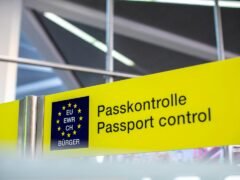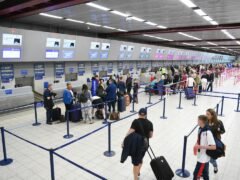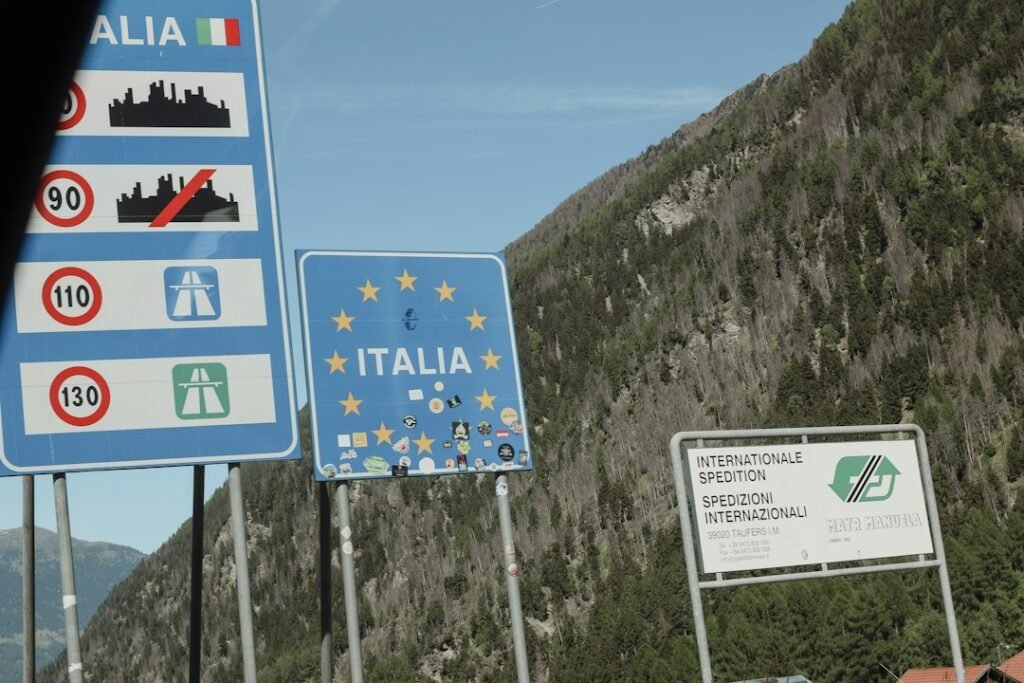
Checked 6 October 2026. The Schengen Area normally allows people to travel between participating countries without routine internal border checks. But “normally” is not the same as “never.” Several Schengen countries currently have temporary internal border controls in force, and travellers can still be asked for documents when moving from one Schengen country to another.
This matters if you are planning a rail trip from France to Germany, driving from Austria into Slovenia, flying between two Schengen airports, or using a multi-country itinerary for a visa application. A journey can be entirely legal and still involve an identity check because a country has temporarily reintroduced border controls.
The practical mistake is assuming that once you enter Schengen, you can pack your passport at the bottom of your suitcase until the flight home.
What “internal border controls” means
The Schengen system removes routine controls at internal borders, but member countries can temporarily reintroduce checks when they consider that a serious threat to public policy or internal security exists.
The European Commission maintains the official list of current notifications on its Temporary Reintroduction of Border Control page.
These controls are separate from Europe’s Entry/Exit System. EES is used at external borders for certain non-EU short-stay travellers. Temporary internal controls are checks that can occur within the Schengen area.
Which countries currently have temporary controls?
The answer changes over time, which is exactly why a static list copied into an old blog post is dangerous.
As of this update, the European Commission’s current notification table includes temporary controls by several countries, with different dates, border sections and reasons. For example, the Commission lists controls involving France, Italy, Spain, Austria, Poland and Sweden, among others, during various periods in 2026 and into 2027.
Do not take that sentence as a permanent country list. Before a cross-border journey, check the official table for the dates of your trip and the exact borders concerned.
Can you be checked on a flight inside Schengen?
Yes. Temporary controls can cover air borders as well as land or sea borders, depending on the country’s notification.
That means a passenger flying from one Schengen country to another may still encounter an identity check even though the route is normally treated as internal Schengen travel.
The check does not automatically mean you have “left Schengen” and re-entered. It is an internal control. What matters is that you can show the identity and immigration documents you are required to carry.
Can you be checked on a train or bus?
Yes. Land-border controls can affect road and rail journeys. In practice, checks may take place at the border itself, on a train, at a station, on a bus, at a road checkpoint or through mobile police controls near the border area.
How disruptive that becomes depends on the route and operating method. Some travellers experience only a quick document check. Others can face queues or delays.
If you have a tight international rail connection, do not build the itinerary on the assumption that a border crossing will always be frictionless.
Does this cancel the Schengen visa?
No. Temporary internal border controls do not abolish the Schengen system or automatically invalidate a visa.
If you hold a valid short-stay Schengen visa, its conditions still matter: validity dates, number of entries, authorised duration and any territorial limitations.
The existence of an internal check simply means authorities may verify that you are lawfully present and entitled to continue the journey.
Should you carry your passport between Schengen countries?
For a non-EU traveller, carrying the required identity and immigration documents is the sensible approach. Do not rely on a photograph of the passport unless the relevant law explicitly allows that for your situation.
A hotel may also need identity documents at check-in, an airline may check travel documents before boarding, and transport police can have separate identification powers.
Your exact obligation depends on nationality and status, but “there is no routine border booth” is not a reason to travel without the documents that prove who you are and why you are lawfully in the area.
What if your visa was issued by a different Schengen country?
A Schengen visa is generally valid for travel throughout the Schengen area according to its terms, but your original application still needs to have been made through the competent country.
The European External Action Service explains the usual main-destination principle: if you visit several Schengen states, the application normally goes to the country that is your main destination based on purpose or length of stay. If the stays are equal and no main destination can be identified, first entry becomes relevant.
An internal border officer can therefore see a visa issued by one country while you are travelling in another. That is not automatically a problem. What matters is whether the trip remains consistent with the visa and entry conditions.
Use the Schengen Trip Nights & Main-Destination Planner when building a multi-country route.
Could a temporary control affect your visa itinerary?
It can affect the practical timing even when the route remains legally valid.
Suppose your itinerary says:
- Paris hotel checkout at 08:00;
- train to Brussels at 09:20;
- Brussels meeting at 11:30.
On an ordinary day, that may already be tight. If temporary controls are active on the route, the margin becomes thinner. The better itinerary is not the one that looks impressive on paper; it is the one you can realistically complete.
For visa evidence, a sensible schedule is easier to defend than a sequence that assumes every transfer will run perfectly.
Do temporary controls change the 90/180-day rule?
No. They do not create extra Schengen days or restart the clock.
For travellers subject to the short-stay rule, the normal maximum of 90 days in any 180-day period still applies.
The Entry/Exit System now provides digital records of many external entries and exits, but temporary internal checks are a different mechanism.
Can border checks make you miss a connection?
They can contribute to delay, especially when a route already has little margin.
The highest-risk situations include:
- separate airline tickets;
- self-transfer connections;
- airport changes;
- cross-border rail journeys followed immediately by a flight;
- ferry connections with fixed check-in cut-offs; and
- journeys where checked baggage must be collected and rechecked.
Use StepOut’s Flight Transit Risk & Connection Checker to expose practical connection risks before buying a tight itinerary.
Internal controls and self-transfer flights
A self-transfer is already riskier than a protected connection because the airlines may treat each ticket as a separate journey. If you also have to cross an internal border control, collect bags or change airports, the connection needs more margin.
Do not assume an airline on the second ticket will protect you because the first flight or border check was delayed. With separate tickets, that protection may not exist.
StepOut’s guide to self-transfer flights and transit visas explains why baggage and immigration requirements matter as much as the advertised connection time.
What should a visa applicant do with a multi-country trip?
Build the trip around the real purpose and realistic movement between destinations.
For each leg, record:
- where you sleep the night before;
- how you move to the next country;
- the scheduled departure and arrival time;
- whether temporary controls are active;
- where you sleep after arrival; and
- whether the trip still supports the stated main destination.
If a route is so tight that a routine document check would destroy it, the itinerary is fragile.
What if you are travelling with only a residence permit?
Residence status can change your visa requirements and EES status, but the exact document you must carry depends on the country that issued the permit and your legal position.
Carry the passport and residence document required for the journey unless official guidance says otherwise. Do not assume a residence card alone replaces the passport for every cross-border trip.
Are internal border controls the same as police checks?
No. Even without a formally reintroduced border control, countries can have police powers to conduct identity or security checks under national law.
The Commission’s temporary-control list concerns formal notifications under the Schengen rules. That is not the only circumstance in which a traveller might be asked to identify themselves.
What happens if you are stopped?
Stay practical. Present the documents requested, answer the actual questions and keep supporting travel evidence accessible.
A traveller on a normal tourist route might have:
- passport;
- valid Schengen visa where required;
- hotel confirmation;
- train or flight booking;
- return or onward ticket;
- insurance evidence if relevant; and
- proof of the purpose of travel where appropriate.
Do not alter an itinerary or invent an explanation because you are nervous about the issuing country printed on a visa. A truthful multi-country route is easier to explain than a manufactured one.
Example: France to Germany by train
Imagine a traveller with a visa issued by France because Paris is the main destination. After five nights in Paris, they take a train to Germany for two nights.
If temporary controls are in force on the relevant border, the traveller may be checked. The French-issued visa does not become invalid simply because the train enters Germany. The important points are that the visa permits the trip, the main-destination logic remains truthful and the traveller can explain the route.
If the traveller instead spends one night in France and ten in Germany but applied through France solely because the appointment was easier, that is a different problem. The issue is not the border control; it is the underlying visa application logic.
Example: Spain to Italy by air
A passenger flies Madrid to Rome during a period when a temporary air-border control applies to that route. The airline can still operate the flight, but the passenger should allow for document checks and carry their travel documents.
If the passenger has a same-day onward flight from Rome on a separate ticket, the possibility of delay matters. They should not build a 45-minute self-transfer just because both flights are inside Schengen.
How to check controls before travel
Use the European Commission’s live notification table first. Look at:
- the country introducing the control;
- the exact dates;
- whether the scope is land, air, sea or selected borders;
- which neighbouring countries are named; and
- whether the period overlaps your journey.
Then check the airline, rail operator, ferry company or road authority for operational advice.
Do not build an article or itinerary from an old list
This is one of those subjects where freshness is part of accuracy. A border control that exists today may expire, be extended or change scope.
That is why StepOut does not present a permanent “these countries have border controls” list without a date. The correct source is the Commission’s current table.
Travel checklist for crossing an internal Schengen border
- Check the Commission’s current temporary-control list.
- Carry the passport and immigration document required for your status.
- Keep proof of the next destination accessible.
- Add margin to rail, road, ferry and flight connections.
- Do not rely on a tight self-transfer.
- Make sure hotel dates still match the route.
- Keep your trip consistent with the main destination used for the visa application.
- Recheck shortly before travel because controls can be extended or changed.
What if controls are announced after you already booked?
A new or extended temporary control does not automatically invalidate your ticket or hotel booking. It can, however, change how much connection time you need and what documents you should keep accessible.
If your journey crosses a newly controlled border, review the timetable rather than cancelling automatically. Check the transport operator for operational notices, confirm that your immigration documents cover the trip, and add margin where a missed onward connection would be costly.
This is particularly important for separate tickets and same-day rail-to-flight connections. The travel plan should still work if a document check adds delay.
The practical takeaway
Schengen still means freedom of movement across a large internal area, but it does not mean document checks are impossible.
Temporary internal border controls are legal, current and route-specific. A well-prepared traveller treats them as a timing and documentation issue: carry the right papers, leave realistic connection time and verify the official control list for the exact dates of travel.