
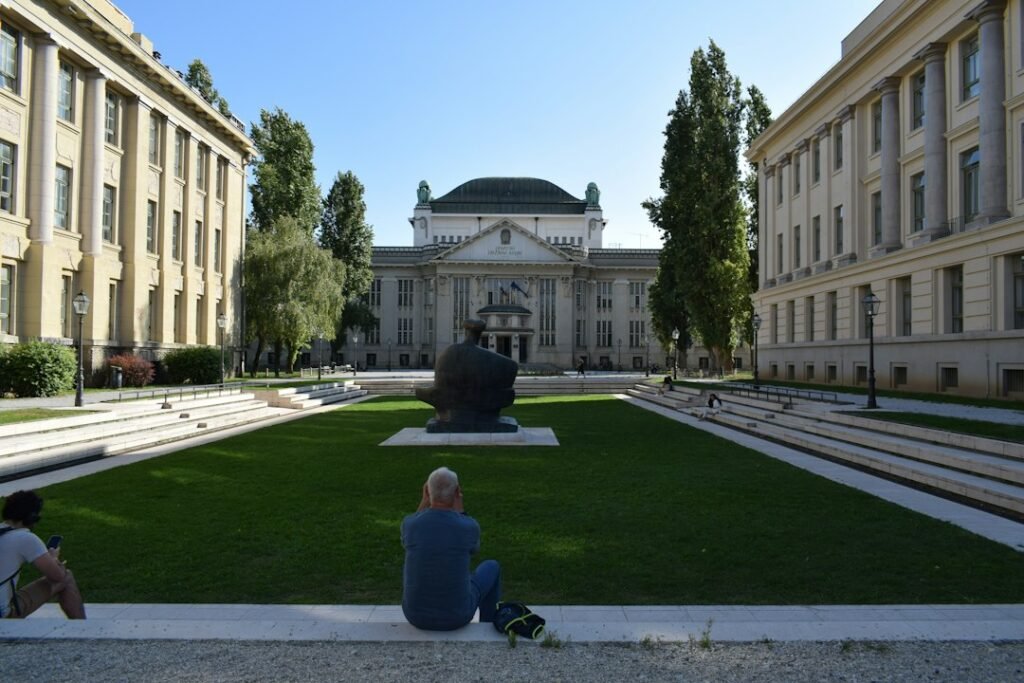
Croatia can be a practical option for international students who want a European degree without the highest tuition and living costs found in some Western European capitals. The important detail is that Croatian tuition varies sharply by field. Humanities and social sciences, natural and technical sciences, and medicine sit in very different price bands.
Current European Education Area guidance gives approximate annual international tuition of €1,100–€10,400 for humanities and social sciences, €1,000–€6,000 for natural and technical sciences, with medicine and health-related programmes usually higher. That means the country can be affordable, but only after you compare the exact programme.
This guide explains how to identify lower-cost Croatian universities, how city and subject affect the total budget, what living costs look like, how admissions and visas work, and how to avoid using the national minimum as if it applied to every degree.
Current tuition ranges in Croatia
Croatian universities set their own tuition. The official national and European guidance currently points to these broad annual ranges for international students:
- humanities and social sciences: about €1,100–€10,400;
- natural and technical sciences: about €1,000–€6,000;
- medicine and health-related programmes: usually higher.
Application fees can also apply, often around €60–€300 according to current European Education Area guidance.
Why field matters so much
A student looking at history, economics or engineering can see a very different tuition profile from a student applying to medicine. Croatia is therefore a poor country to judge through one “average fee.”
Major Croatian universities to research
- University of Zagreb;
- University of Split;
- University of Rijeka;
- Josip Juraj Strossmayer University of Osijek;
- University of Zadar;
- University of Dubrovnik;
- University North;
- Algebra Bernays University.
University of Zagreb
The University of Zagreb offers the broadest academic choice in the country. It can be useful for business, engineering, sciences, humanities and medicine, but the capital’s housing market can raise the total cost.
University of Split
Split combines a major university with a coastal tourism economy. Housing can be seasonal and expensive, so students should not assume a moderate tuition fee guarantees a low total budget.
University of Rijeka
Rijeka is a large university centre on the coast and can offer a different housing profile from Split or Zagreb. Compare programme availability and rent before deciding.
Osijek
Osijek can be especially interesting to cost-conscious students because living costs can be lower than in the biggest coastal or capital-city locations.
Living costs in Croatia
Current European Education Area guidance estimates roughly €400–€800 per month for accommodation, food and transport. The lower end is more realistic in cheaper cities or with student housing; the higher end becomes more relevant in Zagreb and popular coastal cities.
Coastal cities need a separate housing check
Tourism can affect rental availability and prices in places such as Split, Dubrovnik and parts of the coast. Ask whether the university offers dormitories and whether landlords use long-term student contracts or seasonal arrangements.
Student accommodation
Dormitories can reduce cost significantly but places are limited. Check the application deadline and whether international students have priority.
English-taught programmes
Croatia has a growing number of programmes and modules offered in English. Availability is stronger in some fields and at postgraduate level.
Always confirm whether the entire degree is in English, not just selected courses.
Application process
Admissions vary by institution and degree level. International students commonly need:
- passport;
- academic diploma and transcript;
- certified translations where required;
- language evidence;
- application fee;
- programme-specific documents;
- recognition of prior education where applicable.
Qualification recognition
Foreign qualifications may need formal recognition. Start early because legalisation and translation can add time and cost.
Entrance exams
Some programmes use entrance tests, portfolios or interviews. Medicine and arts can have additional requirements.
Application fees
Current guidance gives a typical range around €60–€300 at institutions that charge a fee. If you apply to several programmes, include that in your budget.
Visa and residence
EU/EEA students do not need a visa. Non-EU students generally need the appropriate visa or temporary residence for study and should prepare admission, financial, insurance and accommodation evidence.
Proof of funds
Low tuition does not remove financial evidence requirements. Use StepOut’s Proof of Funds Guide with current Croatian immigration instructions.
Health insurance
Health-insurance requirements depend on nationality and status. Include the cost before arrival.
Scholarships
Official Study in Croatia guidance points to bilateral scholarships, university bilateral agreements, CEEPUS, Erasmus+ and institution-level financial aid or partial tuition waivers.
Do not assume a university waiver is automatic
Institution-level aid can exist, but it should be treated as confirmed only after you have an official award or fee decision.
CEEPUS and Erasmus+
These programmes can support exchange or mobility rather than every full degree. Read the scheme carefully before counting the funding.
Part-time work
International students may be able to work under current Croatian law, but the right and limits depend on status. Do not plan a large tuition gap around expected earnings.
Public versus private institutions
Private providers can offer English-taught degrees but may cost more. Compare accreditation, programme quality and total price.
Medicine needs its own calculation
Medical and health programmes generally sit above the normal humanities or engineering fee ranges. Check current tuition directly with the faculty.
Tourism and hospitality
Croatia’s economy makes tourism and hospitality especially relevant, but students should compare programme quality and internship structure rather than choosing only because the country is a major tourist destination.
Engineering and technical study
The national technical-science range can be relatively competitive. Compare Zagreb, Rijeka, Split and Osijek for tuition and city costs.
Total-cost example
A student paying €3,000 tuition and spending €650 per month has a basic annual cost of €10,800 before travel, insurance, residence fees and deposits.
Course duration
Multiply annual tuition and living costs across the whole degree. A three-year bachelor’s and a five-year professional programme are not comparable on annual fee alone.
Check whether tuition is fixed
Ask whether the fee can change after the first year and whether a deposit is credited toward tuition.
Visa-refusal refunds
Before paying, ask what the university refunds if a visa or residence application is refused.
Currency and payments
Croatia uses the euro. This simplifies comparison for students budgeting in euros, but bank-transfer charges still matter.
Croatia versus Slovenia
Slovenia can be tuition-free for eligible students. Croatia has broader fee-paying ranges but can offer lower-cost city options.
Croatia versus Italy
Italy can reduce public fees through income-based systems, while Croatia often has more straightforward programme-specific prices.
Croatia versus Serbia
Serbia can start at a lower tuition level but has a wider fee range. Croatia has an EU setting and can offer moderate living costs.
Croatia versus Hungary
Hungary has a much larger English-taught programme market and Stipendium Hungaricum. Croatia can be attractive for selected fields and smaller-city living costs.
How to identify a genuinely affordable Croatian option
- Choose subject and level.
- Check exact current tuition.
- Confirm language of instruction.
- Compare Zagreb with lower-cost cities.
- Research dormitory access.
- Check application fee.
- Calculate full degree cost.
- Check scholarships separately.
- Prepare visa/residence documents.
- Read refund rules before paying.
Who should seriously consider Croatia?
Croatia can be a strong fit for students seeking an EU degree, moderate living costs, engineering or social-science options, and university cities outside the most expensive European capitals.
Who should be cautious?
- medical applicants using general tuition averages;
- students assuming coastal housing will be cheap year-round;
- students relying on unconfirmed fee waivers;
- students who have not checked full-degree English delivery;
- students who ignore qualification recognition.
Croatia application checklist
- Choose the programme.
- Verify current fee.
- Check English delivery.
- Prepare recognition documents.
- Check application fee.
- Research housing.
- Calculate annual and full-degree cost.
- Check scholarship routes.
- Prepare immigration evidence.
- Keep payment and refund terms in writing.
Compare Zagreb, Split, Rijeka and Osijek by total cost
Zagreb offers the widest university choice but can have higher rent. Split and Dubrovnik face tourism-driven housing pressure. Rijeka can offer a different coastal balance, while Osijek may be more attractive for students prioritising lower living costs. Compare city-level rent before choosing based on tuition alone.
Seasonal housing risk on the coast
In tourism-heavy areas, some landlords prefer short-term visitors during peak months. Ask whether your contract covers the full academic year and whether rent can change during summer.
Check whether an English option is a full programme
Some Croatian faculties offer English-taught courses or modules without providing the complete degree in English. Verify compulsory subjects, examinations and placements before applying.
Programme duration changes the total
A three-year social-science degree and a five- or six-year medical programme are completely different financial commitments. Multiply annual tuition and living costs by the full degree length.
Medicine should be separated from Croatia’s low-cost image
Medical and health programmes generally sit above the normal fee ranges used in affordability discussions. They can still be competitive internationally, but they are not “cheap” in the same sense as lower-cost humanities or technical programmes.
Ask whether the application fee is refundable
Application charges are usually paid for processing and may not be returned if you are unsuccessful. Apply selectively to programmes where you meet the entry criteria.
Check tuition payment timing
Some universities require substantial payment before enrolment. Ask whether payment is per semester or year and whether instalments are available.
Visa and residence timing for non-EU students
Do not leave immigration until after every university step is complete. Work backwards from the expected start date and allow time for document recognition, admission confirmation, visa/residence processing and housing.
Scholarship timing matters
Bilateral, Erasmus+ or institution-level funding can close on a different schedule from admission. Track funding and degree deadlines separately.
Check professional recognition before choosing a regulated degree
Medicine, nursing, architecture and other regulated professions may require recognition in the country where you later want to work. Verify this before paying tuition.
Do not rely on a coastal part-time job to fund the degree
Tourism creates seasonal work, but employment should not be the foundation of tuition affordability. Work availability, language and residence conditions can all limit income.
Arrival costs
Your first month can include rent deposit, first rent, residence fees, insurance, transport, phone setup and household basics. Keep an arrival reserve outside your normal monthly budget.
What to ask before accepting
- What is the exact current tuition for my programme?
- Is the full degree taught in English?
- Is there an application fee?
- Can tuition be paid in instalments?
- Is student housing available?
- What happens after visa refusal?
- Does the fee change later?
- Are scholarships available before enrolment?
When Croatia is likely to be good value
Croatia can work well for students who find a programme near the lower end of the field range and study in a city with manageable housing.
When Croatia may not be cheap
High-fee medical study, premium private programmes and coastal private housing can make Croatia more expensive than alternatives in Romania, Poland or the Baltics.
Build separate budgets for inland and coastal Croatia
Students often compare Croatia as if every city had the same cost. A useful budget should separate Zagreb, coastal tourist cities and lower-cost inland centres. Private rent, transport and food can move enough to change which university is actually cheapest.
Check whether student housing is available for the whole year
Some housing arrangements are tied to the academic calendar. If you plan to stay through summer for an internship or work, ask whether you can remain in the dormitory and what private housing would cost if not.
Watch for programme-specific equipment or fieldwork costs
Engineering, design, architecture, marine science and health programmes can require equipment, laboratory materials, field trips or protective clothing. These costs may not appear in the tuition figure.
Use the application fee strategically
If a university charges €100–€300 to apply, do not submit speculative applications to programmes where you are missing prerequisites. Screen eligibility first and spend the application budget on realistic choices.
Scholarship support may be mobility-focused
CEEPUS and Erasmus+ are important, but they often support exchanges or mobility rather than every full-degree applicant. Make sure the funding model matches your actual study plan.
Check whether the degree includes Croatian-language placements
An English-taught programme can still include clinical, school, public-sector or community placements where Croatian is important. Ask about this before enrolling, especially in health and education fields.
Keep a conservative coastal-housing backup
If you study in Split, Dubrovnik or another tourism-heavy city, identify at least one realistic long-term housing alternative before arrival. Seasonal rental pressure can be more important than a small tuition difference.
Compare the complete offer, not just the university name
When two Croatian universities admit you, compare tuition, application fees, housing, transport, programme language, accreditation and placement requirements together. The more famous option is not automatically the better value.
Do not let tourism-season work distort your budget
Seasonal jobs may look attractive in coastal cities, but the academic calendar, residence conditions and language requirements can limit what you actually earn. Use employment as optional support, not as the reason the degree is affordable.
Check the cost of getting home during breaks
International students often overlook travel. If you expect to fly home once or twice a year, include realistic fares in the full-degree budget, especially from smaller airports.
Keep an emergency housing reserve
Coastal rental markets can change quickly. A reserve large enough for a temporary room and new deposit reduces the risk of being forced into an expensive last-minute contract.
Check whether your programme includes summer obligations
Some Croatian programmes include fieldwork, placements or intensive modules outside the normal semester. That can affect housing, travel and your ability to return home during breaks. Ask before building a budget around leaving the country every summer.
Use the full first-year cash requirement
Combine tuition due before enrolment, application fee, housing deposit, first rent, insurance, residence costs and travel. This is the amount you may need before part-time income or scholarship payments begin.
Ask whether fees change for later years
Institutional tuition can change by academic year. Confirm whether your fee is fixed for the cohort or subject to annual revision.
Keep your housing search tied to the academic calendar
In coastal cities, a room that is affordable in October may be unavailable or repriced during summer. Ask about full-year contracts and what happens between academic years.
One final programme check
Confirm the current tuition and housing deadline for your exact intake before you pay.
Frequently asked questions
How much is tuition in Croatia?
Current guidance gives about €1,100–€10,400 for humanities/social sciences and €1,000–€6,000 for natural/technical sciences, with medicine usually higher.
How much does it cost to live in Croatia?
Roughly €400–€800 per month under current European Education Area guidance.
Can I study in English?
Yes, but availability varies by institution and degree level.
Are application fees common?
Some institutions charge around €60–€300.
Is Zagreb the cheapest city?
No. Other student cities may offer lower housing costs.
Compare Croatia by subject and total cost
Croatia’s affordability should be compared with Low-Cost European Countries and Affordable Student Cities in Europe rather than tuition alone. Students interested in the country’s tourism economy can use the Hospitality and Tourism Degrees guide, while sustainability-focused applicants can compare Environmental Science and Sustainability.
Before relying on an annual cost figure, cross-check the current European Education Area profile for studying in Croatia for current tuition, English-programme, living-cost and visa information.
Final decision
Croatia can offer good value when the programme sits near the lower end of the tuition range and the city has manageable housing. It is not uniformly cheap, especially for medicine or coastal housing. Compare the exact programme and city through StepOut’s Affordable Universities in Europe pillar.
Use Study in Croatia for current national guidance and confirm the exact fee with the institution.