
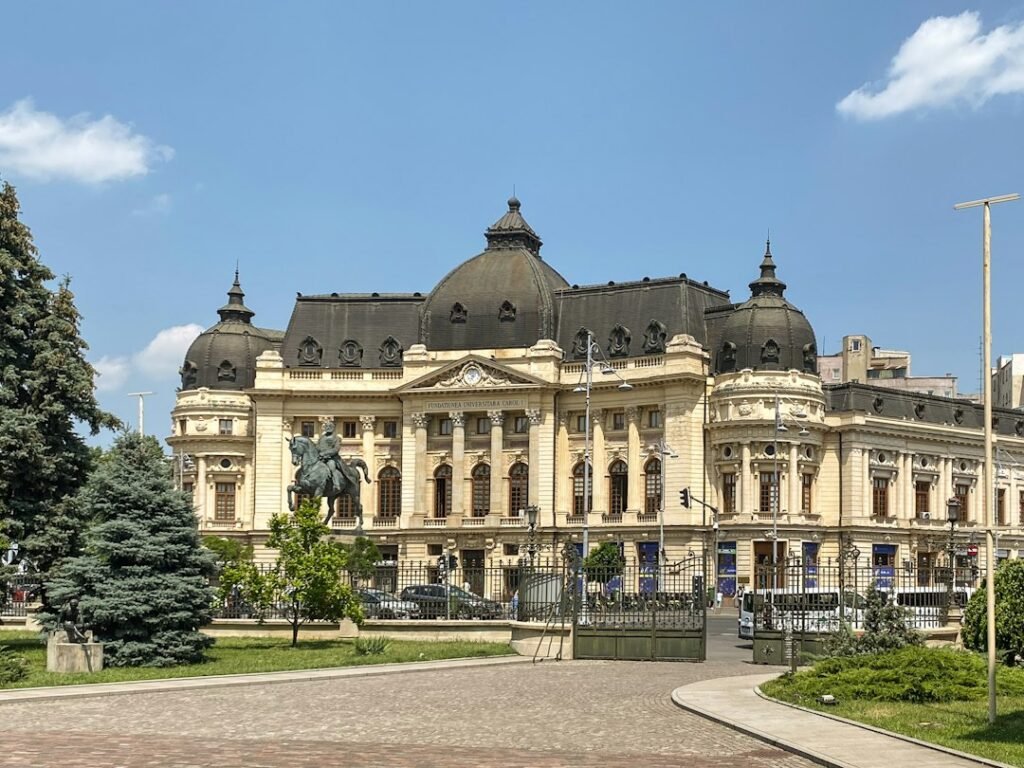
Romania can be one of the more affordable places to study in Europe, but the useful question is not simply whether “Romanian universities are cheap.” Tuition varies by field, university and nationality, and a course that looks inexpensive on a general list may cost more once you include housing, insurance, residence paperwork and the money you need to arrive safely.
For international students, Romania is attractive because the official national study portal publishes both broad cost guidance and programme-level tuition. That makes it possible to compare real courses instead of relying on recycled “cheapest universities” lists.
This guide explains how to evaluate affordable universities in Romania properly: what current official fees look like, which institutions and programme types deserve closer attention, how living costs affect the decision, what non-EU students need to prepare, and how to avoid choosing a course simply because the headline tuition looks low.
How much does university cost in Romania?
Romania’s official Study in Romania portal currently states that tuition can range from about €400 per year to almost €9,000 per year depending on the study domain and the student’s country of origin. That wide range is important. It means Romania has genuinely low-cost options, but it is not one flat-price market.
For non-EU students, the European Education Area currently gives a broad average of roughly €2,000–€5,000 per year, depending on the programme and institution.
The safest approach is therefore to use the official Study in Romania programme database and check the fee attached to the exact course you are considering.
Current programme examples from the official Romanian database
The programme database currently shows a range of affordable examples for non-EU students. These are not a ranking and they can change, but they show what the lower-cost end can look like.
| University / example | Programme example | Language | Current non-EU tuition shown |
|---|---|---|---|
| West University of Timișoara | Accounting and Management Information Systems | German | about €1,980/year |
| West University of Timișoara | Applied Modern Languages | Romanian | about €1,980/year |
| University of Bucharest | Business Administration | English | about €2,100/year |
| University of Bucharest | Political Science | English | about €2,500/year |
| University of Bucharest | International Relations and European Studies | English | about €2,500/year |
| Gheorghe Asachi Technical University of Iași | Industrial Design | English | about €2,430/year |
| Gheorghe Asachi Technical University of Iași | Civil Engineering | English | about €3,500/year |
| University of Agricultural Sciences and Veterinary Medicine Cluj-Napoca | Agronomy | Romanian | about €3,000/year |
The examples above are valuable because they show three things. First, English-taught study in Romania can still sit around the €2,000–€3,500 range in some programmes. Second, technical subjects can cost more than social-science or business examples. Third, the language of instruction matters.
Which Romanian universities should cost-conscious students research?
A serious shortlist should start from programme fit, not a “cheap universities” label. The following institutions are worth researching because they appear repeatedly in Romania’s national programme database and offer a broad range of disciplines:
- University of Bucharest;
- West University of Timișoara;
- Gheorghe Asachi Technical University of Iași;
- Alexandru Ioan Cuza University of Iași;
- Babeș-Bolyai University;
- University of Agricultural Sciences and Veterinary Medicine Cluj-Napoca;
- Politehnica University of Bucharest;
- University of Craiova;
- Transilvania University of Brașov.
That does not mean every programme at these universities is low-cost. The point is that they are established institutions with enough course breadth to make programme-by-programme comparison worthwhile.
University of Bucharest: a useful benchmark for English-taught affordability
The University of Bucharest is especially useful as a comparison point because the national portal currently lists English-taught examples around €2,100–€2,500 per year for some non-EU students.
A student looking at business, political science or international relations can therefore compare a major capital-city university without immediately moving into Western European tuition levels.
The caution is housing. Bucharest can be more expensive than smaller Romanian cities, so a slightly higher or lower tuition figure should be compared against realistic rent rather than treated in isolation.
West University of Timișoara: low tuition can be paired with a major student city
West University of Timișoara currently shows examples near €1,980 per year for some non-EU programmes. Timișoara is a major university city, which can make it more attractive than choosing a small institution purely because the fee is low.
Check language carefully. Some of the lowest-priced programme examples may be taught in Romanian or German rather than English.
Gheorghe Asachi Technical University of Iași: affordable technical study needs field-level comparison
Technical universities are useful to compare separately because engineering tuition can be higher than business or humanities tuition.
The official Romanian database currently shows English-taught examples around €2,430 for industrial design and around €3,500 for civil engineering and telecommunications-related programmes at Gheorghe Asachi Technical University of Iași.
For engineering applicants, a €3,500 annual fee may still be competitive compared with many Western European or English-speaking destinations, but the correct comparison should include programme accreditation, laboratory facilities, professional recognition and graduate outcomes.
Cluj-Napoca: strong academic city, but check housing carefully
Cluj-Napoca is one of Romania’s best-known university cities. It offers major institutions such as Babeș-Bolyai University and the University of Agricultural Sciences and Veterinary Medicine.
Its popularity can make housing more expensive than the lowest national averages. A student who sees a €3,000 tuition figure should therefore research actual local rent before deciding that Cluj is cheaper overall than Iași or Timișoara.
Living costs in Romania
Romania’s official study portal currently provides useful indicative figures:
- campus dormitories: around €60–€85 per month;
- shared housing: around €80–€150 per month;
- private housing: around €130–€300 per month;
- food: roughly €100–€300 per month;
- utilities: around €40–€60 per month;
- phone and internet: around €20–€40 per month;
- medical insurance: from around €12 per month depending on arrangement.
These figures should be treated as national guidance, not guaranteed prices. City, location, property standard and availability can move costs significantly.
How much should you budget per month?
The European Education Area currently estimates typical student living costs in Romania at around €600–€900 per month. That estimate is broader than the individual national cost items because it accounts for a fuller monthly life.
A cautious student budget should therefore not assume the cheapest dormitory price will always be available.
Tuition plus living cost: what a first-year budget might look like
Consider a non-EU student paying €2,500 tuition. If total living costs average €650 per month for twelve months, the living-cost component alone is €7,800. Add tuition, travel, insurance, residence fees and initial deposits, and the first-year budget becomes much higher than €2,500.
This is why StepOut treats affordability as total study cost rather than tuition alone.
EU/EEA and non-EU students can pay differently
EU/EEA students generally receive fee treatment closer to Romanian students. Non-EU students commonly pay fees denominated in euros and may face separate admission and visa procedures.
Always check the line that applies to your nationality in the programme database. A fee shown for Romanian or EU students should not be assumed to apply to a non-EU applicant.
English-taught programmes in Romania
Romanian universities offer programmes in English, French, German and Romanian. The European Education Area specifically notes that many universities offer full-degree programmes in English, French or German.
That is useful for students who want affordable European study without first becoming fluent in Romanian.
But English-taught availability varies by subject. Business, international relations, engineering and selected sciences may be easier to find in English than every humanities or professional programme.
Medicine and health programmes need a separate budget
Romania is popular among international medical students, but medical and health programmes often sit well above the lowest tuition examples used in affordability comparisons.
Do not use a €2,000 business or humanities fee as evidence that medicine will cost the same.
Admission process for international students
Applications are generally made directly to universities. The European Education Area notes that many Romanian institutions use online application systems.
Common requirements can include:
- passport;
- school or university transcripts;
- diploma or certificate;
- proof of language proficiency;
- certified translations where required;
- application form;
- proof of payment of an application fee if applicable.
Requirements differ by institution and degree level, so use the university’s own admissions page as the controlling source.
Non-EU admission often needs more time
Non-EU students should apply early because the process can involve university admission, national recognition or acceptance steps, visa preparation and residence paperwork.
Do not treat the university deadline as the only deadline. Work backwards from the date you need to submit a student visa application.
Student visa planning
Non-EU/EEA students generally need a student visa before travelling to Romania for long-term study. The European Education Area lists common supporting evidence such as:
- official university acceptance;
- proof of sufficient financial resources;
- health insurance;
- valid passport;
- accommodation evidence.
After arrival, students generally need a residence permit for the study period.
Use StepOut’s Visa Guides and Proof of Funds Guide to prepare the broader financial and immigration side.
Scholarships in Romania
Romania offers government, university and Erasmus-related funding routes. The European Education Area notes that the Romanian Government Scholarship can provide full funding for selected non-EU students, including tuition, accommodation and a monthly allowance.
Do not assume you will receive a scholarship. Build the study plan using the tuition you would have to pay without one, then treat confirmed funding as a reduction.
Romanian Government Scholarship
This scholarship can be attractive for eligible non-EU students, but the programme has its own nationality, language, degree and application conditions. Verify the current call directly before planning around it.
University scholarships
Some institutions offer merit-based or needs-based support. These can differ by faculty and may be available only after enrolment or after strong academic performance.
Housing strategy
Romania’s low dormitory figures can be a major advantage, but university housing is not unlimited.
Before accepting an offer, ask:
- Is dormitory accommodation guaranteed?
- When does the application open?
- How are rooms allocated?
- Can international first-year students apply?
- What happens if I do not receive a place?
Use StepOut’s International Student Accommodation Guide before paying a private landlord.
Application fees and hidden costs
Some Romanian programmes show no application fee in the official programme database, while others may charge one through the university process.
Additional costs can include:
- document translation;
- legalisation or certification;
- credential recognition;
- visa fee;
- residence permit;
- insurance;
- initial housing deposit;
- travel.
These should be included in your application budget.
How to identify the most affordable Romanian programme for you
Use a five-step process.
- Filter by subject and language. Do not start with price.
- Check the non-EU or EU fee that applies to you.
- Compare city housing.
- Check course duration and professional recognition.
- Calculate the full programme cost.
What makes a Romanian university genuinely affordable?
A genuinely affordable option is one where you can pay the tuition and realistic living costs for the full degree without depending on an uncertain scholarship or immediate part-time job.
The best-value university is therefore not always the one with the lowest fee.
Part-time work
International students can work under Romanian rules, but work permission and limits depend on status. Do not build a tuition plan that assumes you will immediately find employment.
Part-time work is better treated as a contribution to daily costs.
Degree recognition
Romania participates in the European Higher Education Area. Degrees from accredited Romanian institutions use the Bologna structure and ECTS framework.
If you plan to work in a regulated profession, check professional recognition in the country where you want to practise.
Romania versus Poland, Slovenia, Serbia and Italy
Romania can compete strongly on tuition and housing, particularly for some non-EU students. Poland offers a similar fee band in many programmes. Slovenia can be cheaper for students who qualify for tuition exemptions. Serbia has very low starting fees but a much wider tuition range. Italy can be attractive through public-university income-based fees and exemptions.
Use the parent Affordable Universities in Europe pillar for the Europe-wide comparison. This page remains the owner for Romania.
Who should seriously consider Romania?
Romania can suit students who:
- want English-taught European degrees at moderate tuition;
- are comparing €2,000–€4,000 annual tuition options;
- value relatively low housing and daily costs;
- are comfortable researching universities outside the most famous Western European destinations;
- can verify accreditation and programme fit independently.
Who should be cautious?
Be cautious if:
- you are choosing only because an agent says Romania is “the cheapest”;
- you have not checked whether the programme is actually taught in English;
- you are applying to medicine using general tuition averages;
- your budget depends on guaranteed dormitory housing;
- you have not checked visa and proof-of-funds requirements.
Romania application checklist
- Use the official Study in Romania programme database.
- Confirm language of instruction.
- Confirm tuition for your nationality.
- Check admission prerequisites.
- Check application fee and document requirements.
- Estimate city-level housing.
- Calculate first-year and total degree cost.
- Search scholarships separately.
- Prepare visa and proof-of-funds evidence early.
- Read the university refund policy before paying.
Compare programme duration before calling one option cheaper
Romanian bachelor’s programmes can run for three or four years depending on the subject, while some professional degrees are longer. A €2,200 annual fee for four years can cost more overall than a €2,800 programme completed in three. Always multiply tuition by the normal degree duration before comparing universities.
Check whether the lowest fee is attached to the language you actually need
Romania’s programme database makes language visible, which is useful because some of the lowest-cost options are taught in Romanian or German rather than English. If you need English-only study, filter for English first and compare those fees separately.
Ask what happens if your visa is delayed
Before paying a large deposit, check the university’s latest-arrival policy, visa-refusal refund rules and whether the intake can be deferred. A cheap programme is not financially safe if you can lose a large payment because the visa timeline slips.
Budget the arrival month separately
Your first month can cost much more than an ordinary month because you may pay a housing deposit, first rent, transport, residence paperwork, insurance, bedding, basic household items and a phone plan at the same time. Keep an arrival reserve outside the normal monthly budget.
Check annual fee changes
Ask whether tuition is fixed for the whole degree or can change each academic year. If the fee is reviewed annually, model a modest increase so your later-year budget is not built on the first-year figure alone.
Frequently asked questions
How cheap are Romanian universities for international students?
Official guidance says tuition can range from about €400 to almost €9,000 per year depending on programme and nationality. Many non-EU examples in the national database sit around €2,000–€3,500.
Can I study in English in Romania?
Yes. Many universities offer English-taught programmes, particularly in business, international relations, engineering, medicine and selected sciences.
Which Romanian university is the cheapest?
There is no responsible single answer because tuition varies by programme and nationality. Compare the exact course rather than the institution name alone.
How much is student accommodation?
Official national guidance currently gives roughly €60–€85 per month for campus dormitories, €80–€150 for shared housing and €130–€300 for private housing, though actual city prices vary.
Is Romania cheaper than Germany?
Germany can have no tuition at many state universities, while Romania can have lower living costs. The cheaper total option depends on the exact programme and city.
Do non-EU students need a visa?
Generally yes for long-term study, followed by residence-permit formalities after arrival.
Explore Romania by subject as well as by country
Romania is one of the strongest country hubs in this cluster because current official programme data supports multiple English-taught fields. Compare Romania through the Europe-wide Engineering, Psychology, Public Health, Pharmacy, International Relations, Biotechnology and Biomedical Science, Agriculture and Food Science and Hospitality and Tourism guides.
Before relying on a national average, cross-check the current European Education Area profile for studying in Romania and then confirm the exact fee on the university programme page.
Before paying tuition, cross-check the current European Education Area profile for studying in Romania alongside the official Study in Romania programme database for current tuition, living-cost and visa guidance.
Final decision
Romania is a serious affordability option because the country combines relatively low tuition in many programmes with modest housing and living costs. But the strongest Romanian choice is not “the cheapest university.” It is the accredited programme whose tuition, city cost, language and academic value fit your budget from enrolment to graduation.
Before applying, verify the live programme fee through Study in Romania, calculate housing using current local evidence, and compare the total cost against the wider Affordable Universities in Europe cluster.